




By Greg Mowat, Forensic Tile Consultants
Specialty tiles—which include agglomerate tiles, concrete tiles, clay pavers, stone tiles and terrazzo tiles—are prized for their unique looks. However, these same products can lead to installation challenges not often present in more standardized offerings. The performance of specialty tile is also affected by the area of use, method of installation and proper post-installation maintenance by the owner.
Agglomerate tiles are manmade, usually consisting of stone pieces and/or aggregates held together with a synthetic binder such as polyester or epoxy resins. This binder, which can often be moisture- and/or heat-sensitive, will have a profound effect on the behavior and performance of the tile.
Most mortar manufacturers recommend installation of agglomerate tiles with epoxy or rapid-setting mortars. Achieving a minimum 95% contact and coverage is recommended to reduce cracking or curling after installation. Follow the agglomerate tile and/or mortar manufacturer’s installation instructions carefully to achieve successful results.
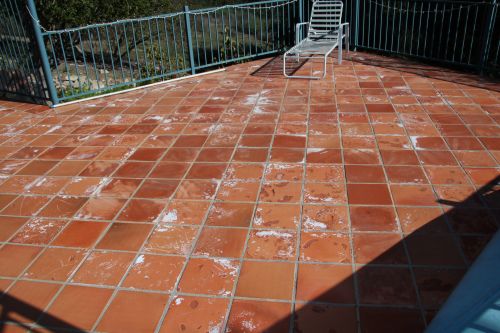
Clay pavers—informally known as terracotta tiles—are available as Mexican, Spanish, Saltillo, Tecate, Talavera and Lincoln pavers. Mexican pavers are made in Mexico while Spanish pavers are made in Spain. More specifically, Tecate pavers are made in Tecate, Mexico, while Saltillo pavers are made from clay in the country’s Saltillo River. Talavera and Lincoln pavers are additional types of Mexican pavers.
Many clay pavers are painted. Talavera tiles are handmade in Mexico and can feature variances in color and imperfections in the finish. These tiles are meant to be imperfect and are often used in a rustic or Southwestern setting. Talavera tiles may be clay or ceramic.
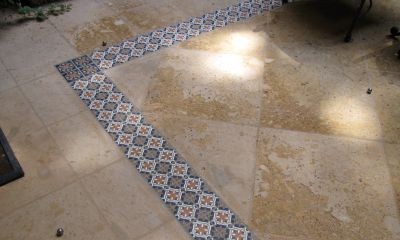 Clay pavers are typically made of baked earth. The cheaper the paver, the more sealers and long-term maintenance are required. Clay pavers can be hand-formed (whether primitively or by artisans) then fired, pressed and fired, or extruded and fired. Extruded pavers are typically denser than pressed pavers, while pressed pavers are typically denser than hand-formed tiles.
A crust-like finish typically occurs on the surface of clay pavers when fired in beehive kilns. The colors of Saltillo tiles are determined by how long the surface is exposed to the flames. Lincoln pavers are usually brownish/orange, while Tecate tiles are typically reddish/orange and may have a rougher texture.
Wider grout joints are common and recommended with irregular shaped clay pavers. Pre-sealing the clay paver or using grout release is recommended to protect the paver from absorbing grout. Grout widths of ½” and wider will require more aggregate (sand) in the grout to strengthen it.
Clay pavers are not recommended for installation in showers. When installed outside, these tiles should not be exposed to daily watering, sprinkler spray or fertilizer. Exterior pavers installed directly to a concrete slab on-grade are subject to efflorescence. Restoring clay pavers may require a specialist to clean, strip, restore and refinish them. Never grind a clay paver, as it will destroy the unique crust finish and require replacement.
Concrete tiles are made with cement. They may be poured in place (handcrafted) or extruded, and are available in many colors, shapes and sizes. Better concrete tile manufacturers will test their materials to ASTM standards and properly cure the cement tiles.
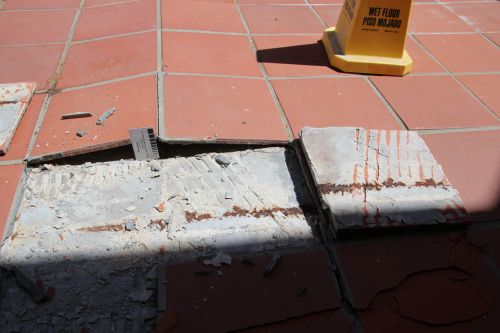 Grout release and sealers are recommended. Failure to properly cure the tiles prior to installation can lead to curling or shrinkage after installation. Lineal grout cracking is a typical symptom of this type of shrinkage. Rapid setting mortars will assist in reducing curling. Follow the tile and/or mortar manufacturer’s installation instructions carefully.
Stone tile installation requires consideration of the stone’s specific properties. These include:
Water sensitivity for serpentine and green-colored marble tile, which may be subject to curling or warping when exposed to water during installation. Green and blue limestones, agglomerate and resin-based tiles may also warp or curl. Most mortar manufacturers can test stone tiles and make recommendations for appropriate setting materials. For example, the mortar manufacturer may know if the stone tile is mildly water sensitive and recommend a product with reduced water volume.
Shading and variation in color, shade and character (including veining) throughout any given lot should be approved prior to installation. Blending of the stone tiles prior to or during installation will help in avoiding blocking, where one shade is surrounded or bordered by a different shade.
Marble soundness classifications are A, B, C and D in descending order of soundness, and ascending order of reinforcement and/or repair requirements. The C and D stones may have too many veins and inclusions and are not recommended for wet or exterior areas.
Iron staining or yellowing. Slates in particular may contain soluble iron that causes bleeding/staining if installed in wet areas. Light-colored marbles may yellow due to iron oxide, especially when installed in wet areas.
Fiberglass mesh. Fiberglass mesh may be applied to the back side of stone tiles when a fabricator is working to reduce breakage during polishing or honing, or to reduce breakage during shipment. The mesh may be reinforced with epoxy or polyester resins, or other solutions. As long as the mesh does not pull right off the back of the stone tile, installation can be performed by switching to an epoxy bonding mortar. Another option is to grind the mesh off the back of the stone prior to installation.
Most fabricators do not communicate when this change in production occurs, so part of the shipment may feature the natural stone tile back while the other may include the mesh reinforcement. Upon discovery of this mesh, a change order may be necessary. When in doubt, contact your favorite mortar manufacturer for the proper installation mortar and procedure.
Terrazzo tiles are made with a variety of natural marble and granite stones with color pigments in a cementitious base or synthetic grout-type matrix. Because of the nature of the cement, pigments and marble, these tiles are subject to color (shade) and tonal variation. Blending tiles from several pallets and boxes is recommended.
Terrazzo tiles are not recommended for exterior installation. Follow the terrazzo tile manufacturer’s installation instructions. If instructions are not available from the manufacturer or distributor, ask for assistance from your favorite mortar manufacturer.
For large floor/paving or veneer applications of specialty tiles, specifications may not exist. Request recommendations from the architect, owner or builder for the location and placement of movement/expansion joints.
Always work toward successful tile and stone installations!


