





By Brett Miller, NWFA Vice President Technical Standards, Training & Certification
Wood separations such as splits, splinters and shake can happen for a variety of reasons, but once they appear, they must be repaired to restore the integrity of the floor. Fortunately, these repairs typically are easy to make. The first step is to identify the type of wood separation that has occurred before starting any repairs.
Splits/Cracks
Identification
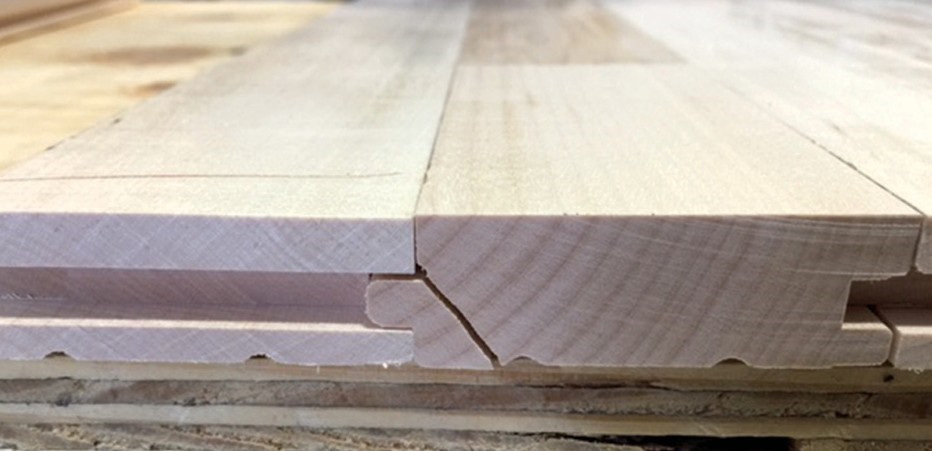
Splits, which sometimes are also called cracks, are defined as a tearing apart or rupturing of the wood that may run at various angles to the growth rings. They can appear on the face of the board or below the face surface.
Causes
- Mechanical damage caused by a variety of potential sources, including the following:
- Damage that occurs when the tree hits the ground as it is felled during harvest
- Mishandling of the product in the factory, during transport or during installation, such as when the product is dropped, banged or in other ways
- Overdriven or improper fasteners, which can split or crack the tongue as a result of incorrect air compressor pressure
- When the fastener schedule is too close
- Splits or cracks may become apparent with a loss of moisture content, usually as a result of a reduction in relative humidity or extremely dry conditions (low RH), which can expose prior damage to the wood.
- Splits/cracks may telegraph through to the finished surface of the wood, causing less elastic finishes to display fine linear cracks in the surface of the finish film precisely in the same location as the underlying anomaly.
Cures
- Isolation repairs such as wood filler or color-matched putties may be used to address aesthetic concerns.
- Affected boards may need to be replaced.
- No remedy may be necessary.
Splinters/Slivers
Identification

Splinters, or slivers, are defined as sharp fragments of wood that have separated or fractured away from the edge or face of the board, and that protrude from the floor.
Causes
- Unevenness of the flooring surface from textured, distressed, hand scraped, wire-brushed, rough- sawn, reclaimed or otherwise purposefully manufactured or site-altered
- Damage during installation of the flooring
- Dents or gouges. The force of a dent crushes the wood in the center and can separate the wood fibers at or near the edge of the dent, resulting in immediate, noticeable splinters or splinters that appear later with floor use
- Unevenness in the flooring surface caused by expansion, cupping, edge-crush, compression-set, grain raise from moisture issues or subfloor irregularities
- Vertical deflection in the wood floor or subfloor system resulting in broken and splintered edges.
- Normal foot traffic can have the effect of concentrating a disproportionately high amount of force on high spots or high areas resulting in splinters, either immediately, or over time.
- A wood floor that has been sanded past its useful life, resulting in splintering on the groove side of the individual boards.
- Distorted or irregular grain patterns within the wood (sometimes known as shelly-grain) can become exposed or lifted with changes to humidity or moisture levels. This is a natural characteristic of the wood.
- Side-bonded flooring boards resulting in fractured and splintered edges.
- Maintenance-related issues resulting from steam cleaners, moisture, etc. Excess moisture can expand the wood grain resulting in splinters. Application of steam can alter the orientation of wood fibers, and may result in splinters
- Splinters and slivers should not be confused with shake, but often accompany it.

Cures
- Address any moisture-related issues prior to correcting any splinters or slivers
- For minor slivers or splinters along the edges of boards, carefully shave them off with a razor knife then touch-up as necessary
- For wire brushed, distressed or grain-raised flooring, address as suggested by the flooring In some cases, it may be possible to buff with a Tampico/soft bristle brush attachment in order to remove loose splinters or slivers. Based on the severity of the splinters and the type of floor, a recoat or touch-up may be necessary.
- Replacement of affected boards may be necessary
- No action may be Nothing can be done to avoid how textured flooring wears or performs.
- No two floors are identical and every board is unique in how it receives All parties should be made aware of the variability and inconsistency of textured, distressed, hand-scraped, wire-brushed, rough-sawn, reclaimed or otherwise purposefully manufactured or site-altered flooring during the sales process. A lifestyle change or protective footwear may be necessary to avoid creating splinters on these types of floors.
Shake (Ring Shake/Ruptured Grain)
Identification
Shake, sometimes called ring shake or ruptured grain, is defined as a separation of the wood’s fibers along the grain, which occurs parallel to, and usually appears between, the rings of annual growth.
Causes
- Can be the result of any of the following in the standing tree:
- Gale or hurricane-force winds
- Tree wound
- Tree age
- Site and environmental conditions
- Wood structure and chemical composition
- Damage that can be caused during the felling of the tree
- Changes in environmental conditions can expose existing shake when it was not visible at the time of grading or installation
- During the finishing process, when water popping, using chemical-reactive conditioners, water-based stains or water-based finish products (sealer, finish or stain) on a newly sanded wood floor, the wood surface and exposed fibers are hydrated resulting in grain raise, which can lift or distort the edge of previously concealed shake that was not visible at the time of grading or installation.
- Site conditions on factory finishes can expose existing shake when it was not visible at the time of grading or installation
Cures
- Shake typically is not allowed in most grades of flooring, and should not be installed if visible at the time of installation
- When shake becomes apparent in site-finished flooring, a low-viscosity adhesive, such as cyanoacrylate adhesives (CA), may be used to create a bond in the area of concern. Then sand and refinish as necessary.
- If low-viscosity adhesive is not an alternative, individual board replacement of affected boards may be necessary
- In factory-finished flooring, replacement of the affected plank typically is the recommended remedy
The National Wood Flooring Association has detailed information about wood flooring separations such as splits, splinters and shake available through NWFA University, an online training platform that is convenient and affordable. More information is available at nwfa.org/nwfa-university.aspx.


