




Proper subfloor preparation can mean the difference between a quality finished project and a failure
By Jeffrey B Johnson, MAPEI FCIS business & marketing manager
In commercial flooring, the success of an installation is rarely determined by the finish material alone. Often, performance is dictated by the condition of the substrate and—just as importantly—the materials selected to correct its deficiencies. As flooring systems have become more sophisticated (whether 2mm-thick rubber or non-pvc flooring products, luxury vinyl tile/plank or large-format tile) the tolerance for substrate error has narrowed significantly. What may have been considered acceptable 10 years ago is now a common source of failure.
Concrete substrates present the greatest challenge in commercial environments. Moisture remains a leading cause of flooring failures, particularly on fast-track projects where slabs are covered before reaching equilibrium. Even with the advent of high-moisture resistant adhesive systems that can be successfully used on high-moisture concrete slabs, issues can still lurk in the concrete mix that make the life of the flooring contractor miserable.
Most moisture-related failures can be attributed to a couple generic issues. With the industry push toward wet or semi-wet installation methods for resilient adhesives, porosity becomes a big issue. If you do not have a dry, porous substrate to bond to, the adhesive will behave like it is contained in a plastic bag and never dry. The resilient floor itself is non-porous, leaving no place for the moisture in the adhesive to escape.
Along with the usual moisture tests, it is important to check for porosity using ASTM F3191 procedures. When those results come back as non-porous, mechanical scarification of the surface is required. This can be done with grinding equipment or shot blasting. Grinding is potentially easier to do and less costly, but you need to remove any of the fine, powdery material left after the grinding process to prevent a bond breaker situation. Shot blasting is ideal and leaves a clean, porous surface to work on.
Many moisture-related floor problems can be attributed to contaminants in one form or another on the surface of the concrete slab. These contaminants—whether soluble salts from bleed water excess, topically applied densifiers or moisture blockers, or organic adhesive residues—can all create an osmotic imbalance at the interface between the concrete slab and adhesive bond line. When this happens, moisture or water is pulled from the slab and accumulated under the non-porous floor covering. This liquid destroys adhesives and causes untold problems with the installation. (Again, many of these types of problems can be mitigated by mechanical preparation of the substrate.)
When moisture levels exceed acceptable limits of the adhesive systems or flooring material, the solution is not to delay indefinitely but to immediately specify the appropriate system. Two-component epoxy moisture mitigation products have become a standard part of commercial construction, allowing installations to proceed while protecting adhesives and flooring from long-term exposure to high humidity. These systems are often paired with primers and cementitious underlayments to create a controlled, compatible surface.
There is also a new group of water-based products that comply with ASTM F3513 and can be used to control moisture emissions. These products do not require mixing and can be easily applied over porous substrates using a roller. Moisture mitigation is not a solitary product decision, but part of a system that must align with both the substrate and the flooring manufacturer’s requirements.
Flatness is another area where expectations have evolved. While traditional FF and FL numbers defined in ASTM E1155 are still relevant, they often do not meet the needs of modern flooring materials. Large-format tile and resilient flooring products frequently require tighter tolerances, sometimes as strict as 1/8” in 10’.
Across all flooring types—resilient, wood, carpet and tile—the trend in commercial construction is clear. Success depends on specifying and installing complete systems rather than relying on individual products.
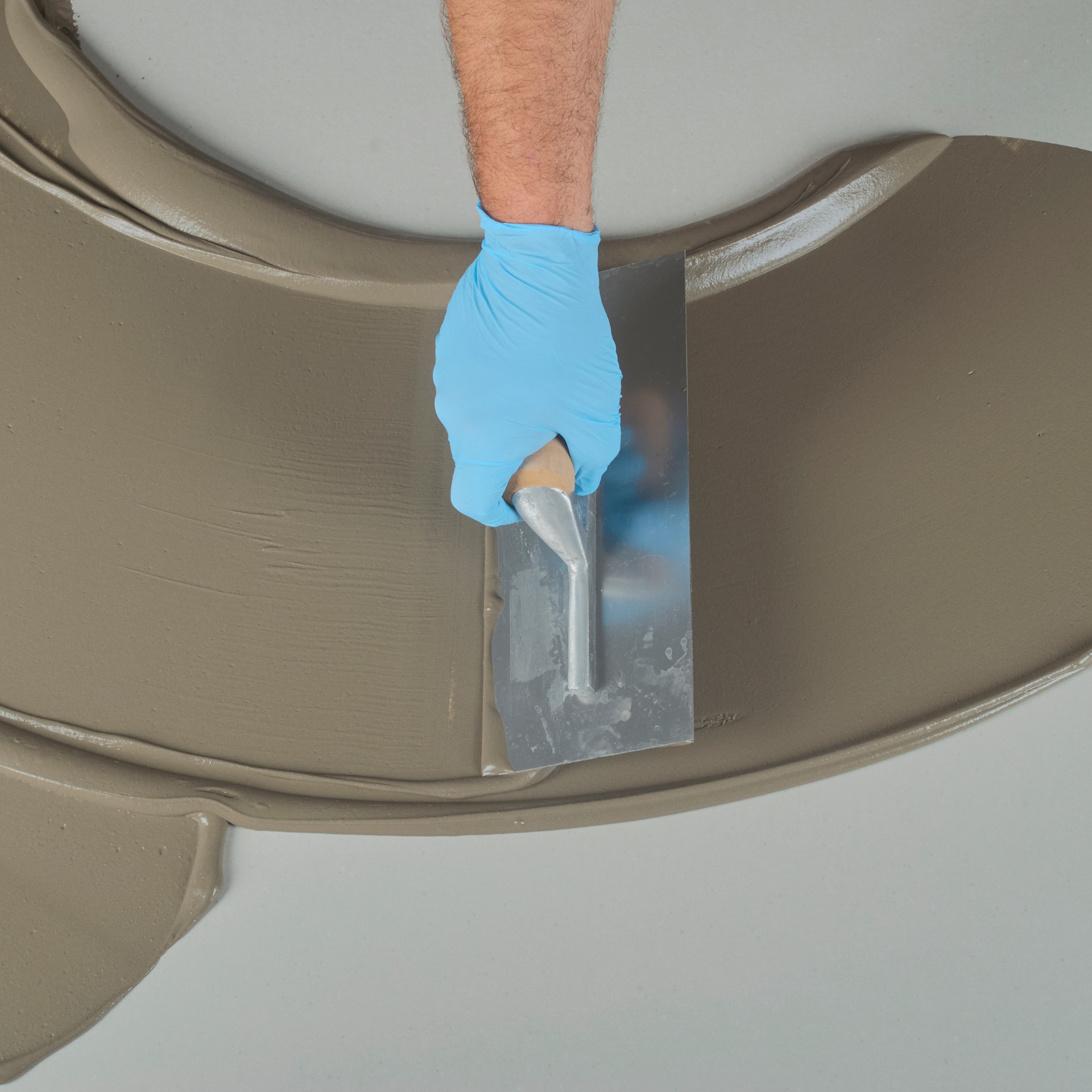
Achieving this level of flatness on a commercial slab always requires the use of self-leveling underlayments or patching compounds. Pumpable self-leveling systems have become especially valuable on large projects, where they can be installed quickly and consistently across wide areas. In smaller or more detailed work, rapid-setting patching materials and skim coats allow installers to fine-tune the surface and eliminate imperfections that would otherwise telegraph through the finished floor.
It is important to note, however, patching and skim coating can never achieve the same level of flatness as a self-leveling underlayment. Skim coating does an excellent job at smoothing the surface and reducing the impact of defects, but these products will never make the substrate flat or level. Don’t get me wrong; I have seen masters of skim coating and their work is remarkable, but it takes skill and time to get it right.
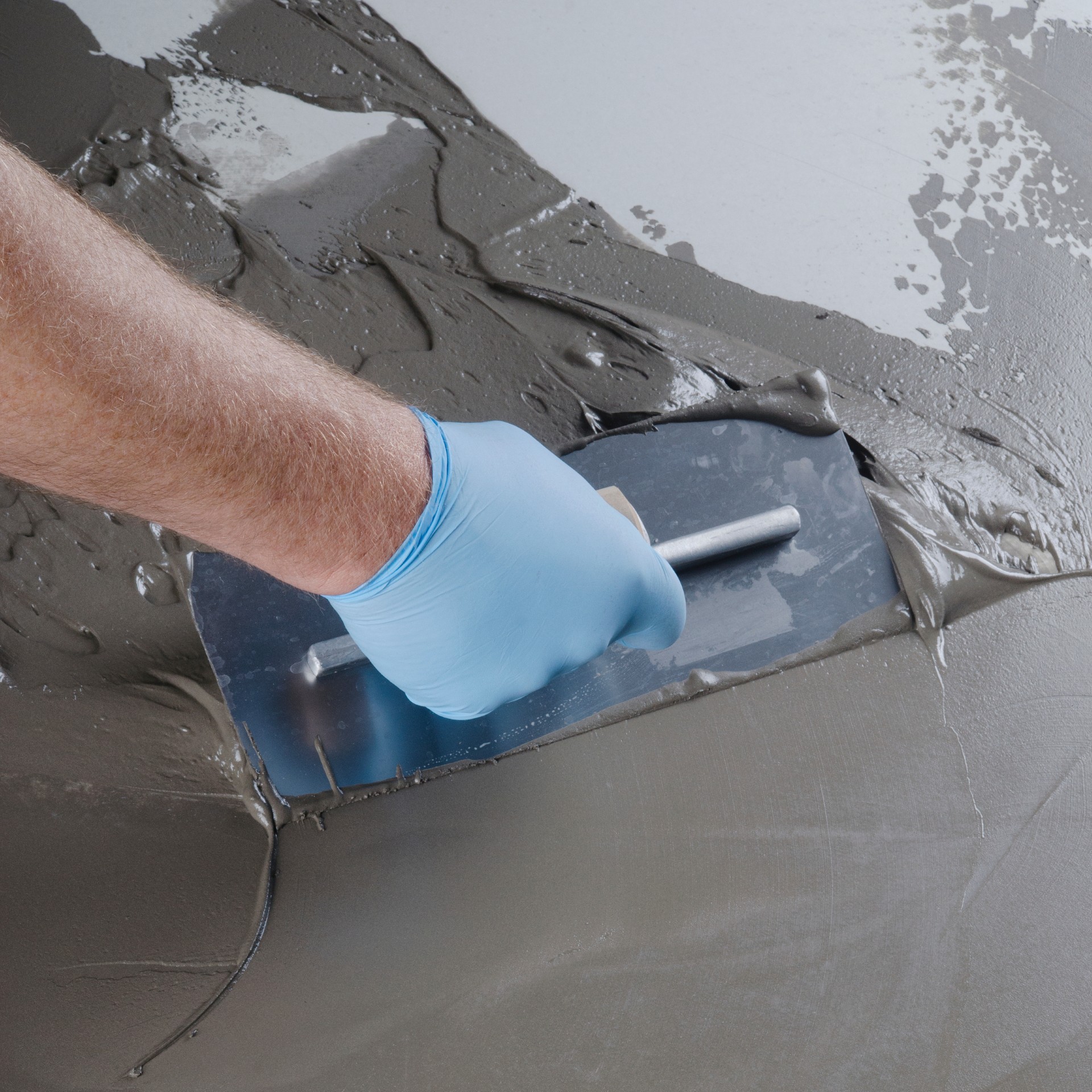
Self-leveling underlayments also take some skill in placement but due to their fluid nature, with a little assistance they create that desired flat, defect-free floor. The use of self-leveling compounds is immediately apparent in areas where resilient floors are installed. Skim coated floors will look wavy in long viewpoints while self-leveled floors are flat and smooth.
Equally important, and often overlooked, is surface preparation. Bond failures are frequently blamed on adhesives or flooring products when the issue can be traced back to inadequate surface profiling or contamination. Standards such as the ICRI CSP Guidelines provide a framework for determining appropriate surface conditions. However, achieving that condition still depends on proper execution. Mechanical preparation methods like grinding or shot blasting, combined with manufacturer-recommended primers, are essential steps in creating a substrate that will accept and maintain a bond.
While concrete dominates commercial construction, plywood substrates are still common in multi-story buildings, tenant improvements and mixed-use spaces. These substrates introduce a diverse set of challenges primarily related to movement and deflection. Unlike concrete, wood systems are dynamic, responding to changes in moisture and load. Preparing these substrates requires attention to both structural integrity and surface condition. Guidelines from organizations such as the APA Engineered Wood Association and standards like ASTM F1482 help define acceptable practices, but field conditions often dictate the level of correction required.
For resilient flooring installations over plywood, underlayment panels play a critical role in creating a smooth, uniform surface. These panels must be carefully selected, installed and fastened to prevent movement and telegraphing. Seams are typically filled with high-quality patching compounds, and the entire surface may require skim coating depending on the flooring type. The goal is not simply to cover the subfloor but create a surface that meets the increasingly strict requirements of modern resilient products.
Tile installations over wood substrates demand an even more disciplined approach. Movement must be isolated, and the substrate must meet established deflection criteria, commonly referenced as L/360 for ceramic tile. This is where systems such as cement backer boards and uncoupling membranes come into play. As outlined in the TCNA Handbook and ANSI A118 standards, these materials are not optional—they are essential components of a successful tile assembly. They provide the stability and separation needed to prevent cracking and ensure long-term performance.
Across all flooring types—resilient, wood, carpet and tile—the trend in commercial construction is clear. Success depends on specifying and installing complete systems rather than relying on individual products. Moisture mitigation, surface preparation, leveling and underlayment materials must all work together, and they must be selected with a clear understanding of the substrate conditions and performance requirements of the finished floor.
Subfloor preparation is where risk is either managed or introduced. In commercial environments where schedules are compressed and expectations are high, there is little room for assumption or improvisation. The professionals who consistently deliver successful projects are those who recognize that what happens below the surface is just as important as what is installed on top—and are willing to invest in the materials and methods to ensure it is done right.


