




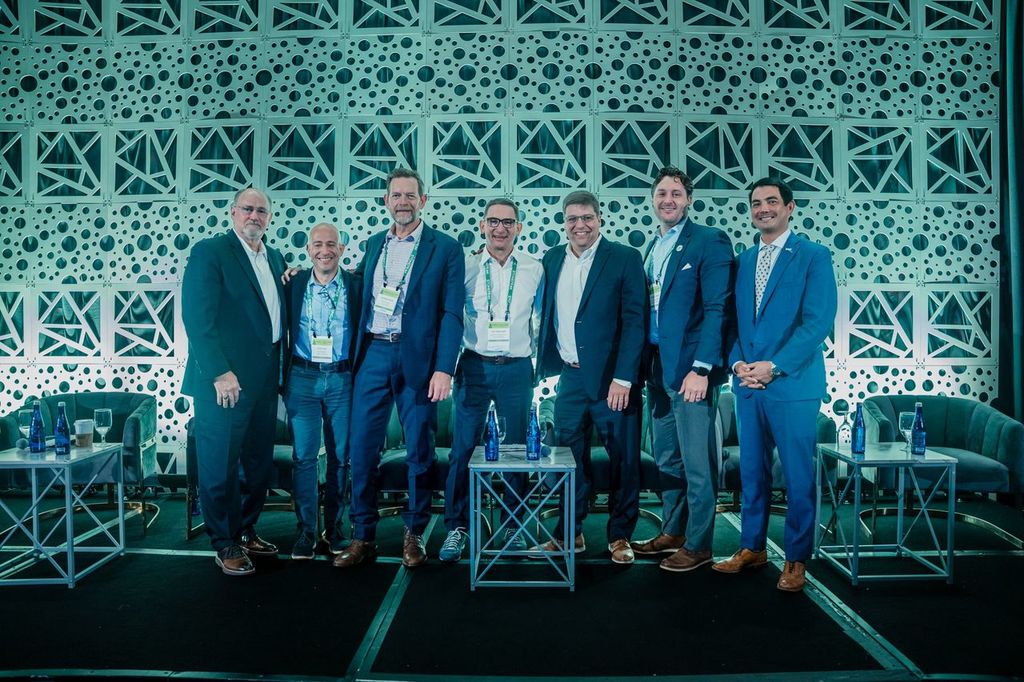
Better communication, stronger specs and a broader understanding of sustainability emerged as key themes at the 2026 Summit
By Roxanne Morris, TCNA
For flooring contractors and installers, sustainability can seem like something that happens upstream during product development or specification. But the discussions at the 2026 Flooring Sustainability Summit made one thing clear: sustainability doesn’t stop when a product is selected. What happens during specification, procurement and installation all determine whether a project’s sustainability goals make it to the finished floor.
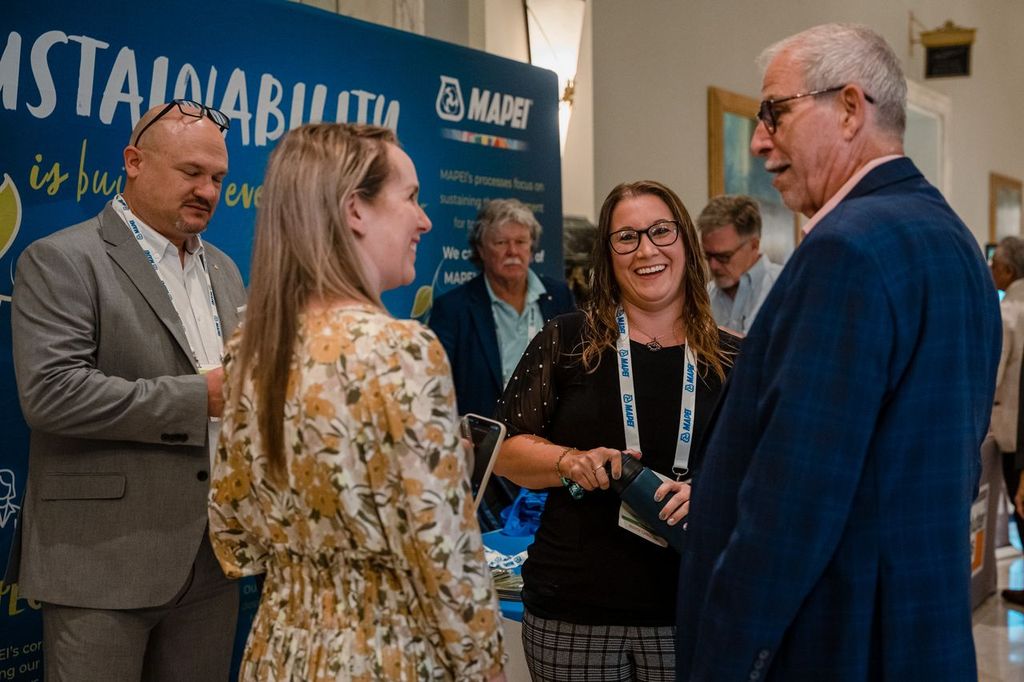
Held July 15-16 at The Mayflower Hotel in Washington, D.C. and hosted by trade associations representing seven different flooring categories, the Summit brought together more than 250 attendees from manufacturing, distribution, installation, architecture & design, standardization, procurement and sustainability advocacy.
Across four panels, seven briefings and three days of engaging discussion, six themes emerged. Here’s how they’re relevant to the people putting flooring systems into the field:
Collaboration, Communication Are Key
Every panel circled back to the same point: Sustainability is too complex for any one group to address alone. Architects, manufacturers, suppliers, retailers, contractors and installers each see a different part of the project. Earlier, clearer and more consistent communication is needed to connect those perspectives—and to protect sustainability specs from being swapped out along the way.
For installers, that communication can make a very practical difference. Installers often feel friction when products are changed late in the process, especially when they can end up blamed for delays and installation complications that could have been avoided had a correct product been bid and selected in the first place.
Contractors who are aligned with designers’ sustainability objectives can help keep projects on track. So can manufacturers and suppliers who understand installation requirements and communicate them upstream to architects and designers. The takeaway: Protecting the spec is a shared responsibility.
Get the Spec Right—and Protect It
Communicating across the value chain aligns expectations, and that starts with the specification. Incomplete specs can create issues downstream. More specifically, specs that don’t clearly include sustainability requirements leave the door open to inadequate substitutions.
Installers often feel friction when products are changed late in the process, especially when they can end up blamed for delays and installation complications that could have been avoided had a correct product been bid and selected in the first place.
Design-build projects are particularly vulnerable to this, as product decisions are often not locked in before construction begins, and cost is usually a significant factor in those selections. Value-engineering happens for legitimate reasons such as budget changes and shifting product availability—and it’s not inherently bad. The key to keeping sustainability goals on track is communication. The sooner a change is communicated, the more opportunity there is to determine adequate alternatives.
For contractors, protecting the spec means understanding the intended product, including its performance and sustainability requirements and seeing those priorities through to installation, even when schedules and budgets get tight.
Storytelling Over Data-Dumping
The flooring industry has invested heavily in transparency. The resulting disclosures—Environmental Product Declarations (EPDs), Health Product Declarations (HPDs) and lifecycle assessments (LCAs)—give designers increasingly detailed information to evaluate products. But data alone won’t result in more sustainable products being selected.
The average consumer may not understand sustainability acronyms or certification labels. Stating a product is sustainable doesn’t explain why that matters. Suppliers, contractors and installers need enough understanding to explain the why behind a product’s environmental or health attributes. When a healthier or more sustainable product gets value-engineered out, it usually isn’t because someone stopped caring about sustainability. Often, they just didn’t have a story strong enough to fight the substitution.
Durability Beats a Narrow Carbon Snapshot
Another shift discussed at the Summit was moving beyond a narrow focus on upfront embodied carbon. Durability and extended service life are also important sustainability attributes to consider. A product that lasts longer—and doesn’t need to be replaced as often—avoids the impacts of making a new one.

While carbon remains an important measure, we need to look beyond a product’s initial impacts. Installation, maintenance, replacement and eventual removal all contribute to a product’s lifecycle impact. Flooring ultimately needs to meet three main requirements: cost, performance and sustainability. Evaluating all three requires a whole-life perspective, including how long a product is expected to perform and what happens to it over the course of its life.
For installers, this reinforces the importance of thinking beyond the finished surface. Proper installation and appropriate system components can contribute to the performance and longevity of the floor long after the project is complete.
The Industry Needs Shared Digital Data
The Summit also highlighted a problem that may seem far removed from the jobsite: sustainability data is still fragmented. EPDs, HPDs and LCAs are stored across different databases and platforms that don’t always communicate with one another. The Common Materials Framework (CMF) provides a common language, but the industry still needs better interoperability between platforms to achieve a true “contribute once, use everywhere” model.
The goal is making sustainability information easier to access at every stage of a project, which means getting the right information into the right people’s hands in a form they can actually use.
Policies Are Shifting, but Sustainability Knowledge is Stable
Summit panelists acknowledged the policy environment is changing quickly and unevenly across states and countries. Extended producer responsibility, PFAS and carbon-related policies are creating different requirements in different markets. But the underlying sustainability knowledge doesn’t disappear when policies change.
That makes it important for companies to establish their own sustainability goals and standards rather than relying entirely on regulations to dictate action. Designers, manufacturers and contractors can all benefit from understanding where the industry is headed—even as regulations continually evolve.
Looking Ahead
The 2026 Summit underscored sustainability is an ongoing industry-wide effort, not a problem that can be solved by a single manufacturer, design firm or trade. For the professionals working closest to the finished floor, the summit offered a clear message: Better sustainability outcomes depend not only on what products are selected, but also on how effectively the industry communicates, coordinates and carries those decisions through to installation.
The Flooring Sustainability Summit is already planning its 2027 event, set for July 14-16 at The Mayflower Hotel in Washington, D.C. Additional event details will be available at FlooringSummit.com.
The summit is co-hosted by the Carpet and Rug Institute (CRI), National Wood Flooring Association (NWFA), Natural Stone Institute (NSI), National Terrazzo and Mosaic Association (NTMA), North American Laminate Flooring Association (NALFA), Resilient Floor Covering Institute (RFCI) and Tile Council of North America (TCNA).
Photos courtesy of Tile Council of North America


