





By Brett Miller, NWFA Vice President Technical Standards & Training
According to the 2024 U.S. FLOOReport published by Market Insights, engineered wood flooring continues to gain market share in the United States. The report, which came out last July, reveals that 68% of current wood flooring sales are for engineered products.
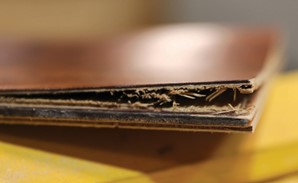
Flooring installers know engineered wood flooring is constructed using multiple layers rather than one solid layer of wood. It can be made using real wood from top to bottom, wood veneers or slats of wood glued together in opposing directions, or real wood on the wearable surface and multiple layers of composite materials for the backing and core. Because of this construction, engineered wood floors can experience some wood distortions that differ from solid wood products. A few of them include wood shear, delamination, telegraphing and end lift.
Wood Shear
Identification
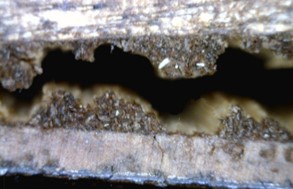
Wood shear occurs when external stresses exceed the strength of the wood fibers within an individual plank of engineered flooring, resulting in the wood fibers being torn apart. When examining this type of failure in an engineered wood flooring plank, wood fibers will be visible at the point of separation, remaining bonded to the adhesive layer.
Causes
- Layers within the plank shrink or swell excessively because of low relative humidity or excessive moisture outside of the manufacturer’s recommendations, thereby creating excessive force on opposing layers sufficient enough to tear the wood fibers apart.
- Inadequate or inoperable HVAC systems resulting in elevated humidity levels.
Cures
- Maintain the environment within the flooring manufacturer’s requirements. When environmental conditions are not specified by the manufacturer, maintain the temperature between 60 to 80 degrees Fahrenheit (15.6 to 26.7 degrees Celsius), and the relative humidity between 30 and 50%.
- It may be necessary to replace the affected boards.
Delamination/Glue-Line Separation
Identification
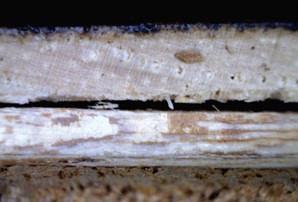
Delamination, which also is referred to as glue-line separation, occurs when two layers or plies of material within a piece of engineered wood flooring separate due to the lack of an adhesive bond. The issue generally appears as a clean separation of layers or plies at the glue-line. Note: this type of issue is unrelated to inadequate relative humidity levels.
Causes
Causes for this issue can be either manufacturing-related, or jobsite-related.
- Manufacturing-related:
- Veneers are not bonded together due to improper or inadequate adhesive application, missing adhesive, dried or uncured adhesive, or steam pockets.
- Jobsite-related:
- Extended or repeated exposure to standing water and/or flooding.
Cures
- Any moisture-related issues must be addressed prior to repair or replacement.
- If delamination occurs only in small areas, it may be possible to inject adhesive in the affected areas and add weight to the repair area until the adhesive cures.
- It may be necessary to replace the affected boards.
Telegraphing Core Material
Identification
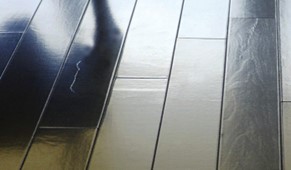
Telegraphing core material appears as visible patterns on the surface of the wood floor plank that resembles variations in the engineered flooring core material.
Causes
- A gain or loss in moisture, causing the wood fillet or finger block core materials to change dimension, which then can telegraph to the surface of the plank.
- Skips, voids, missing or open knots or overlaps within the core material, which telegraph to the surface of the plank.
Cures
- Any moisture-related issues must be addressed prior to repair or replacement.
- Check with the flooring manufacturer for proper repair recommendations.
- It may be necessary to replace the affected boards.
End Lift/Ski
Identification
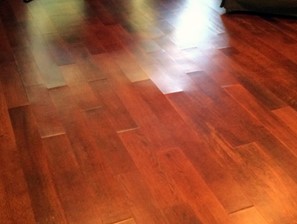
End lift, which also is referred to as ski, is a condition where the ends of installed engineered wood flooring boards deviate from the flat plane and appear raised or curved upward.
Causes
- The flooring is incompatible with the environment in which it is installed.
- Engineered flooring that has experienced an increase in moisture, where the core material running perpendicular to the face of the board swells at a different rate and in a different direction than the adjoining layers. This forces the ends of the material to lift, which then can telegraph to the surface of the plank.
- Inadequate or inoperable HVAC systems, resulting in elevated humidity levels.
- Improperly selected, improperly installed or improperly applied moisture control systems (vapor retarders) that do not provide adequate protection from below the floor.
- Maintenance-related issues can include the following:
- Wet-mopping that results in standing or topical liquid moisture left on the floor.
- Use of steam mops and other steam-cleaning devices.
- Use of non-breathable rugs on the floor.
- Not maintaining relative humidity levels year-round to support the installed flooring.
Cures
- Any moisture-related issues must be addressed prior to repair or replacement.
- Once the moisture content has stabilized, it may be possible to resand or refinish the flooring if it has an adequate wear layer of a minimum 3/32”.
- It may be necessary to replace the affected boards.
The National Wood Flooring Association has detailed information about engineered wood flooring distortions and corrections available through NWFA University, an online training platform that is convenient and affordable. More information is available at nwfa.org/nwfa-university.aspx.


